

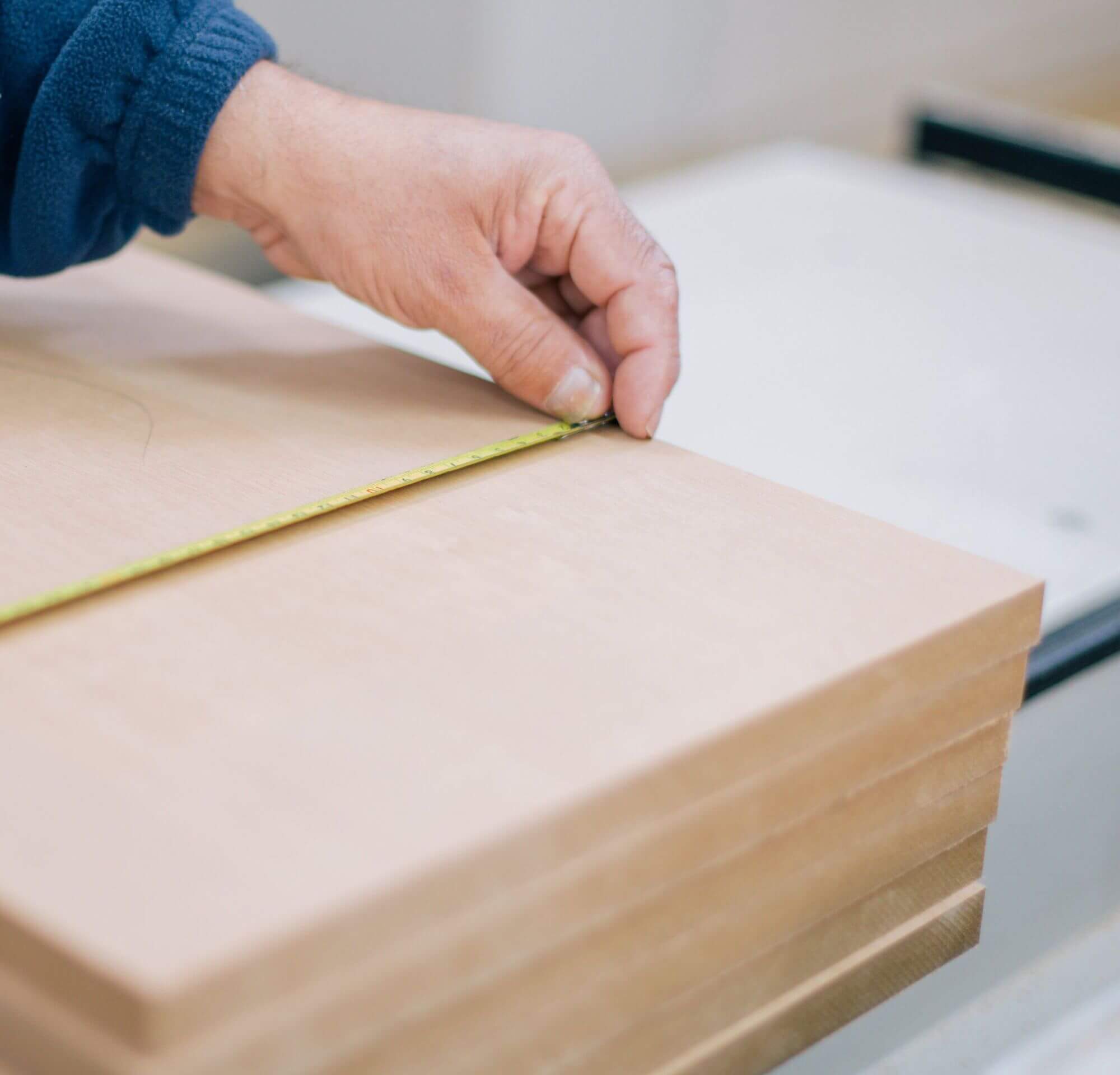
Every day, your business in the wood supply chain loses margin without your even noticing. It’s not just the shavings that end up in the dust extractor or the panels scrapped at the end of the shift: the most expensive waste in woodworking is the kind you can’t see. And that’s exactly where Lean Production comes in—a working method that reveals what we normally take for granted.
In this article, we look at the 7 classic wastes of a wood shop, how to recognize them, and where to start if you want to reduce them.
What Lean Production Is and Why It Matters for the Wood Industry
When we talk about Lean Production, we’re referring to a manufacturing philosophy created to optimize production processes. The goal is to eliminate waste, cutting management costs and boosting the profitability of the business.
But how does all this connect to companies in the wood and furniture sector? This kind of business works with a raw material that is both varied and expensive, yet the workflow is anything but linear. Not to mention the level of customization customers demand and the footprint the finished product takes up in the warehouse.
Waste and the buildup of inefficiencies are an everyday reality. Lean production steps in to help woodworkers and operators recognize the warning signs and, above all, increase the value perceived by the customer.
We’ve written an article that analyzes material waste in CNC machining.
The 7 Classic Wastes in Wood Production
Let’s find out what the 7 classic wastes are that occur in woodworking and how to identify them. If you’ve been wondering why scrap is increasing in your wood production, the answer usually hides in these seven wastes.
1 – Overproduction
This happens when you produce more than you need. The result is that you cut and assemble more components than the actual project calls for.
If semi-finished parts pile up waiting for an order and your space fills with batches of panels produced “ahead of time,” then you may well have an overproduction problem.
2 – Waiting
Have you ever had to bring everything to a halt while waiting for a coated panel to dry or searching for a specific tool? When material, CNC machines, or operators sit idle, your business loses value.
Waiting generates waste during woodworking. That’s why every stage of the production process must be optimized to prevent these bottlenecks from happening.
3 – Transportation
Moving wood panels, semi-finished parts, and tools from one department to another also generates waste. This situation is a symptom of a layout and a production cycle that don’t follow a logical flow from one operation to the next.
Every foot traveled by a forklift loaded with panels represents time and energy spent on material handling, and it also carries a significant risk of damage.
4 – Excess Inventory
Have you ever ended up stockpiling too much timber, glue, paint, and hardware in your warehouse? Anything that sits unused for too long is surplus.
“Just-in-case” stock leads to obsolete material aging in storage. This is capital locked up in inventory that never turns into revenue but, on the contrary, generates inefficiency.
This is excess inventory: raw material, semi-finished parts, and finished products tied up beyond what’s necessary.
5 – Overprocessing
Excessive finishing on surfaces that aren’t visible, tolerances tighter than necessary, redundant sanding or coating passes. These are just some of the issues that can create a difficult, non-linear workflow.
These are all the woodworking operations that create waste because they are superfluous, overly precise, or simply too many. The guiding star of your production is the customer’s original request: eliminate every step that slows down your processes and doesn’t generate value.
6 – Defects
Parts with features that don’t comply with current quality standards have to be scrapped or reworked.
Among the most common defects:
- cutting and drilling errors
- edge-banding problems
- uneven coating
- out-of-spec components
7 – Rework
When a non-compliant panel is identified, “corrections” have to be made to bring it back in line, quality-wise, with your plant’s wood production. However, reworking the part slows down the operational flow, reducing the efficiency of the plant.
Reducing rework right from the design stage is possible with our CAD/CAM software for woodworking.
How to Reduce Waste in a Woodworking Shop: The First Steps
Recognizing waste is the starting point. But how can you concretely reduce waste in your woodworking operations?
- Map the real path of the product, from raw material to shipping. This “value stream mapping” makes it clear where material stops, moves backward, or piles up.
- You can’t improve what you don’t measure. Collect data on scrap, machine downtime, timing, and rework to understand where waste is really concentrated—this is the foundation of any serious wood manufacturing waste reduction effort.
- Clear, repeatable procedures reduce variability and, as a result, errors and defects too. A standard doesn’t make things rigid: it gives you a solid foundation on which to build continuous improvement.
- The people working in production know the waste better than anyone else. Listen to your operators and make them part of the change. This is often the most underrated lever—but also the most effective.
Software and Automation: The Perfect Allies Against Waste
How can you keep waste under control during woodworking? This is where CAD/CAM and woodworking optimization software come into play, optimizing the layout of parts on the panel—an essential step for reducing scrap right from the design stage.
With EasyWOOD, Nesting, and XFactory you can manage every single stage of the workflow, from design to finished product. In doing so, automation of the wood production process becomes a reality, with a reduction in the human variable that cuts down defects and rework, along with a gain in setup times. Fewer errors translate into fewer stoppages and a stronger lean culture.
Recognizing the waste is the first step. The second step is to equip yourself with the tools to eliminate them. We have compiled all the criteria to be evaluated for choosing the CAD/CAM best suited to your production.